
Master of Science in Information Systems
South University's Master of Science in Information Systems is designed to help prepare graduates for a career in, or advancement within, a wide range of positions in the field*. In today's ever-changing digital world, organizations rely heavily on the information and technology they use. The Master of Science in Information Systems (MSIS) program covers both the knowledge and technical side of the business to help bring organizations into the current age of information. Besides learning how information systems currently support an organization's operations, MSIS degree students will also have the opportunity to learn how to design, develop, analyze, and manage emerging information systems and solutions in a rapidly developing field.

*South University does not promise or guarantee licensure, employment, or salary amounts.
Course Requirements
Admissions Requirements
Admissions criteria for Master of Science in Information Systems (MSIS)
Graduate Admissions - Masters level
Prospective students are required to submit the following:
- Completion of application for admission
- Official transcripts for bachelor or graduate degree within 5 weeks of the class start date (refer to Conditional Acceptance). (All credentials earned outside the United States must be evaluated by a NACES or AICE-member credential evaluation service). Please speak with an admissions representative for more information.
Note: See program notes and specific requirements below for each graduate - masters level degree program
Specific requirements for admission to classified graduate status are:
- A bachelor's degree from an accredited college or university.
- Completion of application for admission.
- A 2.0 overall grade point average or higher on completed requirements for the baccalaureate degree, or an earned graduate degree from an accredited institution.
For additional admissions information please see the admissions section here.
For information regarding Conditional Acceptance, click here.
Outcomes
Upon completion of the program, students will be able to:
- Students will communicate effectively in a variety of IS professional contexts.
- Students will analyze IS problems through enterprise architecture methodologies
- Students will utilize Information Systems (IS) resources (people, processes, technology, and data) to support enterprise strategy
- Students will evaluate IS professional decisions and actions based on legal and ethical principles
Career Outlook
These are some of the career options* you can explore when you have earned your degree:
- Computer and Information System Managers
- Database Architects
- Software Developers
- Web and Digital Interface Designers or Managers
- Computer and Information Research Scientists
Individuals in these roles are typically found within various sectors, including but not limited to, corporations, government agencies, healthcare facilities, start-up companies, sales and marketing businesses, and financial service companies. They are established in their field; seeking to incorporate business and technology in converged networks, modern software development methodologies, business intelligence, governance, information security, and emerging technologies.
New Student Orientation
The New Student Orientation helps students develop skills and behaviors of a successful college student:
• Learn about South University and the resources available to support their success.• Practice using the same tools they will encounter in their courses, including Discussions, Microsoft Word/PDF document uploads, and Quizzes.
• Build confidence navigating University systems through an interactive Virtual Scavenger Hunt Quiz.
• Actively engage with course content rather than simply acknowledging completion.
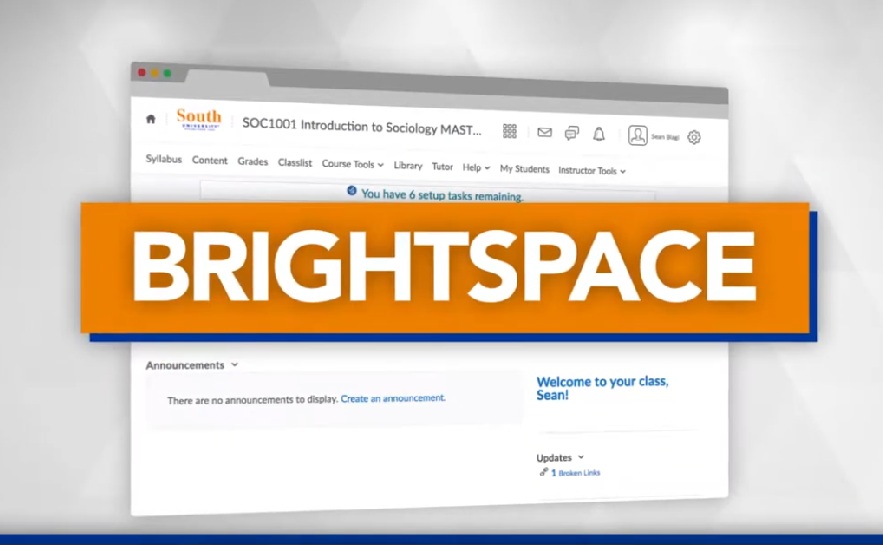
BrightSpace
BrightSpace is an online learning management platform that keeps students connected to classwork and instructors.