
Master of Science in Nursing w/ a specialization in Adult Gerontology Primary Care Nurse Practitioner
South University’s MSN with a Specialization in Adult Gerontology Primary Care Nurse Practitioner program offers a path to earning an MSN degree online*. Adult-gerontology primary care nurse practitioners play a critical role in health promotion and disease prevention for adults as they age. This online MSN degree focuses on gerontology and adult care and entering into advanced nursing practice. Through interactive coursework, thoughtful discussions, and supervised practicum experiences, this MSN program is designed to prepare you to exercise advanced leadership, clinical judgment, critical thinking, and communication in diverse primary care settings. By working through the curriculum, you’ll have the opportunity to develop skills in preventing, diagnosing, and treating common health problems, focusing on at-risk and vulnerable populations.

 The Bachelor of Science in Nursing, the Master of Science in Nursing, and Doctor of Nursing Practice Programs at South University are accredited by the Commission on Collegiate Nursing Education (http://www.ccneaccreditation.org).
*Programs, including all Clinical/Medical programs, have a required in-person clinical, practicum, or externship. We cannot guarantee flexibility in these components of the program.
Graduates are required to pass the national certification exam and obtain a state license in order to work in the field. (Exam names vary by program.) Please refer to the State Professional Licensure Determination and National Certification/Licensure section of the University catalog for additional information. South University cannot guarantee each graduate will pass the required licensure examinations. South University does not promise or guarantee licensure, employment, or salary amounts.
Course Requirements
Note(s):
*If the student receives a failing grade in NSG6021, the student must enroll in and successfully pass the following four (4) credit course: NSG6023 Nurse Practitioner Enhancement.
*If the student is unsuccessful in NSG6998_A please refer to Program Progression Policy for Family Nurse Practitioner and Adult Gerontology Nurse Practitioner Students
Admissions Requirements
Procedure for Admission to Master of Science in Nursing Programs
Note: Not all Online Program offerings are available to residents of all U.S. states. Please contact an admissions representative for further information.
The criteria to determine admission to the Master of Science in Nursing degree program include:
- Completion of the application for admission
- A bachelor's degree in nursing (BSN) from an accredited institution with a cumulative GPA of 2.5 or better on a 4.0 scale; or a master's degree in nursing (MSN/MN) from an accredited institution.
- Submission of official transcripts from every college or university attended within 5 weeks of the class start date (refer to Conditional Acceptance).
- A valid and unencumbered license as a Registered Nurse in all US states or territory in which the student is licensed, including the state in which the student completes all assignments and clinical rotations, for entry and maintenance of admission to the program. (Note that military, federal, and foreign educated nurses must meet their state/territory requirement for nursing licensure).
For additional admissions information please see the admissions section here.
For information regarding Conditional Acceptance, click here.
Outcomes
Upon completion of the program, students will be able to:
Synthesize current scientific research, theories, and concepts from nursing and other disciplines for application in advanced nursing roles.
Collaborate directly with other healthcare professionals using evidence-based resources and technologies in various aspects of the advanced nursing leadership role.
Model a professional leadership role to formulate comprehensive plans of action for ongoing contributions to healthcare system improvements.
Formulate a plan for ongoing contributions to improvement of healthcare delivery and development of health policy in a cost-effective manner.
Demonstrate ethical and legal standards of practice in the decision-making process to assist with the delivery of quality care associated with a specialty area of advanced nursing practice
Formulate and document for various differential and presumptive diagnoses in the adult or gerontological patient with meticulous detail, so coders and billers can apply the correct codes for appropriate reimbursement.
Develop plans of care based on theories of aging, assessment findings, and best-practices to provide holistic, patient-centered care for adult or gerontological populations.
Collaborate with interprofessional associates to provide culturally competent, and sensitive patient-centered care for the adult gerontological client.
Career Outlook
Potential career outcome:
- Adult Gerontology Primary Care Nurse Practitioner
Individuals in these roles are typically found within various sectors, including but not limited to, hospitals, private physician and counseling practices, nursing facilities, community clinics and agencies, and research organizations. They choose to focus their nursing skills on providing care for older individuals in specialized settings such as nursing homes and hospitals.
New Student Orientation
The New Student Orientation helps students develop skills and behaviors of a successful college student:
• Learn about South University and the resources available to support their success.• Practice using the same tools they will encounter in their courses, including Discussions, Microsoft Word/PDF document uploads, and Quizzes.
• Build confidence navigating University systems through an interactive Virtual Scavenger Hunt Quiz.
• Actively engage with course content rather than simply acknowledging completion.
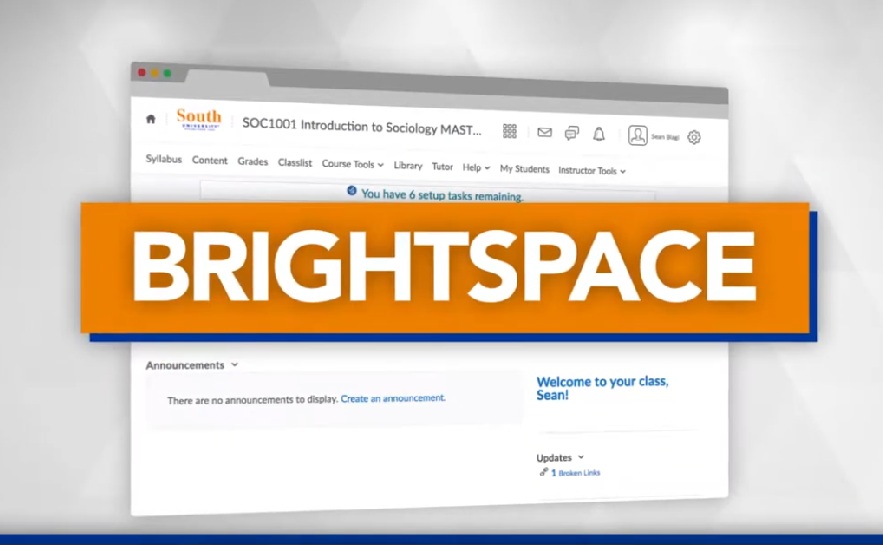
BrightSpace
BrightSpace is an online learning management platform that keeps students connected to classwork and instructors.